Lobular Moonshot Project

Lobular Moonshot Project

CHALLENGE

The Lobular Moon Shot Project campaign seeks £20 million in government funding for lobular breast cancer research. Our challenge was to turn the Westminster vigil into a nationwide conversation, raise awareness of this often overlooked form of breast cancer and reinforce the urgency of the funding call.

We needed to make the campaign relevant to both national and regional media, using the personal stories of women affected by lobular breast cancer to create compelling reasons for the media to engage.

APPROACH

  • Each of the women taking part in the vigil had their own story, their own community, and their own local media. We interviewed participants, gathered images and quotes, and built a bank of case studies across key regions of the UK, giving us a strong local angle to work with.
  • We used these personal stories to create tailored pitches for regional print and broadcast outlets, combining compelling human-interest stories with confident spokespeople and, where relevant, support from a local MP. This allowed us to make the wider campaign feel relevant and immediate to audiences across the country.
  • Ahead of the vigil, we also focused on building national momentum through carefully placed features in key national media, including a first-person piece in Metro by Tristan Loraine, the campaign’s founder, whose wife Susan died from lobular breast cancer last year. We also secured two exclusive features with the Daily Express.
  • With case studies and media opportunities spread across the country, coordination was critical. In the run-up to the vigil and on the day itself, we managed multiple contributors, responded to media enquiries from across the regions and organised interview schedules in real time.
  • Crucially the work didn’t stop when the vigil ended. We followed up with photography from the day for print and online features and continued offering contributors for further media interviews. This helped secure additional coverage, including a feature with the Sun on Sunday and on BBC Morning Live, which extended both the reach and lifespan of the campaign.

RESULTS

Pieces of coverage

78

IMPACT

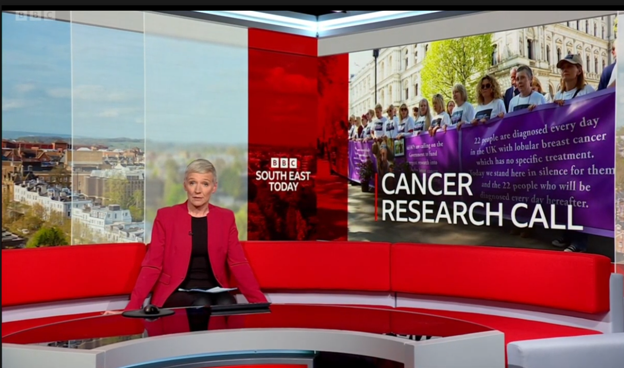
National broadcast, print and online coverage including features with the Daily Express and Metro together with extensive regional TV coverage, across both BBC and ITV news programmes: BBC South East, Good Morning Scotland, BBC Look North, STV, UTV and ITV Tyne Tees.

38 BBC regional radio news outlets ran the story, which was frequently the lead on news bulletins throughout the day.

Numerous regional print and online features, including BBC News South East,Yorkshire Live, BBC North East & Cumbria, and Belfast Live. Social media amplification of the above features.

The initiative achieved significant media reach, prompting a government response and a mention during PMQs.

By utilising a strategy rooted in personal narratives, the campaign successfully raised awareness for this historically under-recognised form of cancer.

No items found.

Testimonial

“Do Good PR provided amazing support for our ‘Silent Vigil’ event opposite Downing Street in April 2026 and we look forward to working with them again in the future.”

CAPTAIN TRISTAN LORAINE, PROJECT MANAGER - LOBULAR MOON SHOT PROJECT

See more case studies

Read More

Safe Haven for Donkeys

When the war in Gaza began, the charity tasked us with raising awareness of its lifesaving mobile veterinary work. Features across key national and international media helped spotlight the team’s critical role in supporting communities, transporting supplies, and caring for animals essential to civilian survival.
Read More

MS Trust

When MS Trust published new data showing the mobility barriers faced by people with MS, we turned the findings into a national media moment, raising awareness of accessibility challenges and highlighting MS Trust’s work supporting people living with MS.
Read More

Hopscotch Children's Nurseries

An independent nursery group in Brighton and the South East, Hopscotch wanted to highlight the pressures facing early years providers. We developed a PR strategy that positioned the CEO as a trusted voice on early years education and family policy, driving engagement with parents, staff, and the wider community.